“Travel isn’t always pretty. It isn’t always comfortable. Sometimes it hurts, it even breaks your heart. But that’s okay. The journey changes you; it should change you. It leaves marks on your memory, on your consciousness, on your heart, and on your body. You take something with you. Hopefully, you leave something good behind.” – Anthony Bourdain
This is the first post on my new blog. I’m just getting this new blog going, so stay tuned for more. Subscribe below to get notified when I post new updates.
If you find yourself in the Malaysian capital of Kuala Lumpur (KL), and wish for a brief escape from the ultra-urban environment and very humid weather; Cameron Highlands makes a perfect getaway destination.
Situated in the northwest section of the Pahang State of Malaysia, Cameron Highlands was an important hill station during the British colonial times. These days, it’s a popular holiday spot especially for jaded city dwellers of KL.
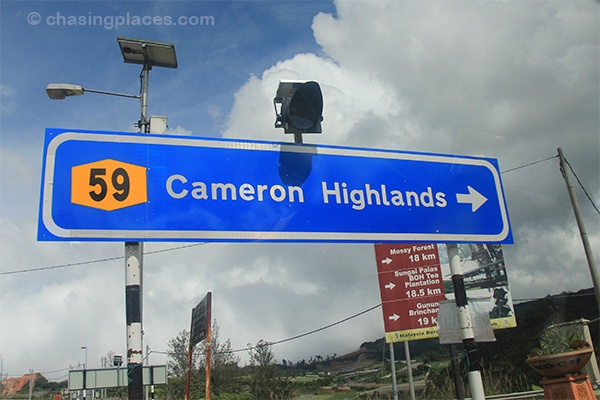
On the way to Cameron Highlands by driving
Cameron Highland’s Cool Temperature
Cameron Highland has become a favorite holiday destination among Kuala Lumpur residents not only for its proximity, but for its cool weather.
Because it is about 1500 meters above sea level and situated on the Titiwangsa Range; Cameron Highlands enjoys a colder and less humid climate compared to KL. During our November visit, the day temperature was around 20°C. By early evening, the temperature dropped to 16°C and eventually went down as the night progressed.
Exploring Cameron Highlands on the Weekend
The opportunity to explore Cameron arose when a friend invited us to go for a short weekend trip. So with two cars and 9 people, we made our way to the historic hill station. We left the city at 9:30 am, thinking that it was early enough.
We thought wrong.
Nobody anticipated that the drive would take more than 5 hours. There are a couple roads one can take to reach Cameron. One of them is Old Tapah Road – the route most public buses use. This route is very windy with plenty of blind turns. We decided to take the Simpang Pulai route via Ipoh. We had to pay a 20 Ringgit toll, but it was worth it because the road is more straightforward, making it less dangerous to drive on.
We finally reached our destination at around 3 pm, after stopping somewhere for lunch and getting a little bit lost.
Cameron Highland’s Main Towns
The towns of Brinchang and Tanah Rata have the greatest number of accommodation choices. Even though Tanah Rata has more developed infrastructure and facilities, we pre-arranged to stay at an apartment in the more rustic Brinchang. The apartment unit was large enough to accommodate 9 people.
The Culture and the Market
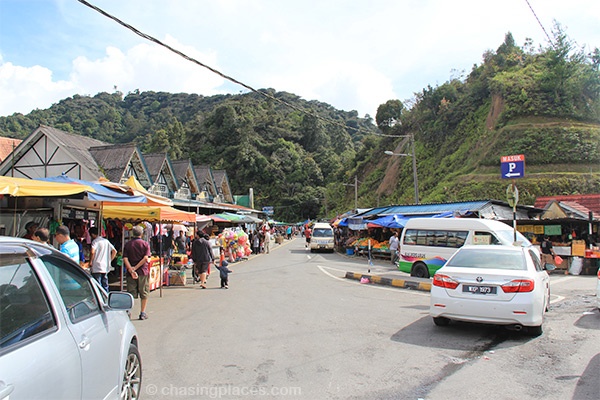
Brinchang Market
Surrounded by lush hills, Cameron Highlands has very few high rise buildings. Structures tend not to be flashy and the Malay culture is very evident. Green vegetable patches are commonly seen near residences and very old 1920’s Land Rovers seemed to be the primary mode of transport.
Walking through the Brinchang market was fascinating and fun. The market occupies a narrow strip with wooden stalls lined up on both sides.
Strawberries, honey, and tea are the main goods produced in Cameron Highlands. Naturally, the market is full of these products and their variations. Their prices are considerably cheaper than in Kuala Lumpur.
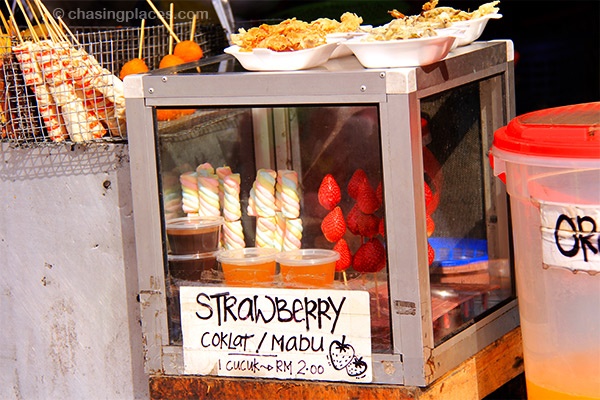
My favorite is definitely the chocolate covered strawberries on a stick. I found the vendors really nice. I could tell that they’re good friends with their fellow vendors. They didn’t seem to take competition very seriously. Some of them were giggling upon the sight of Caucasian tourists. One of the lady vendors repeatedly called my companion handsome to get his attention. This marketing ploy worked quite well.
Fresh strawberries at Brinchang Market, Cameron Highlands
Visiting a Tea Plantation on Cameron Highlands and other Things to do
There are many ways to experience Cameron Highlands. Tourists can go for a jungle trek, visit waterfalls and tour farms or just relax at one of the hospitable hotels in the region.
Some of the notable farms that welcome visitors include:
Ee Feng Gu Farm
Kea Farm
Butterfly farm
Lavender complex
But the undisputed highlight of my visit was definitely the Boh Sungai Tea Plantation.
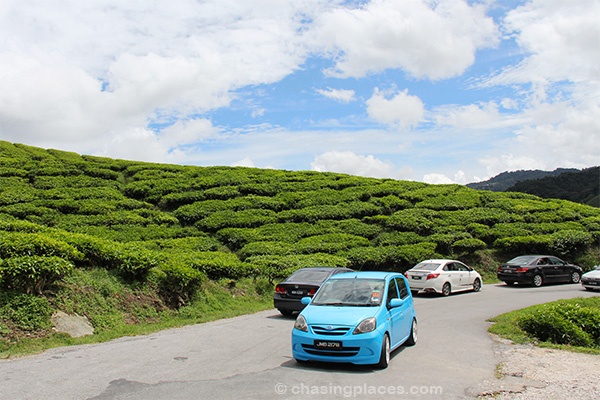
To reach the Plantation’s Sungai Palas Tea Centre, we had to drive on this very tricky and weaving one lane road. A very skilled and smart driver is needed to pull this one off. Luckily we had one.
The drive to the Boh Sungei Tea Plantation
So what’s so special about the Boh Sungai Tea Plantation and Tea Center?
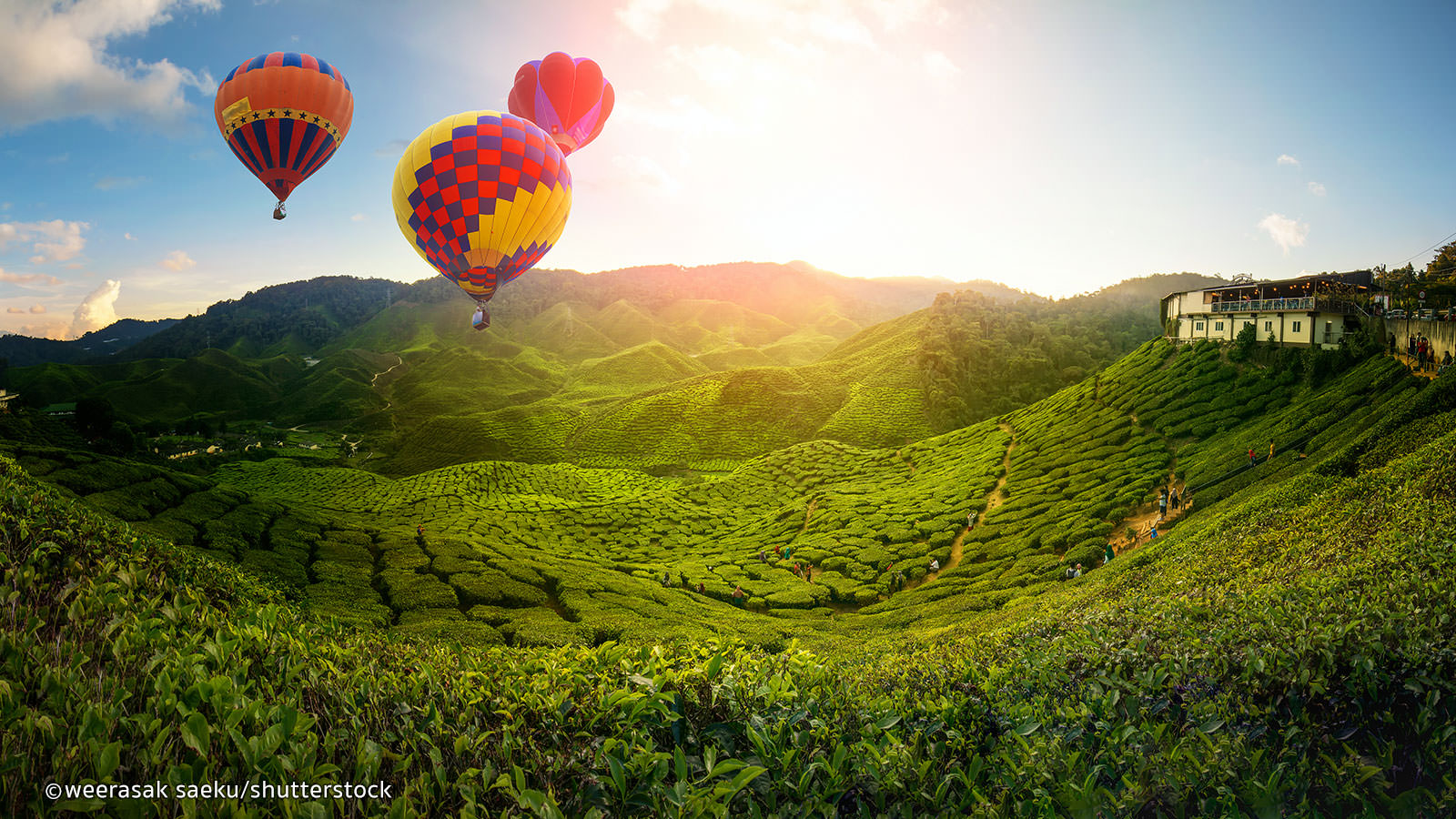
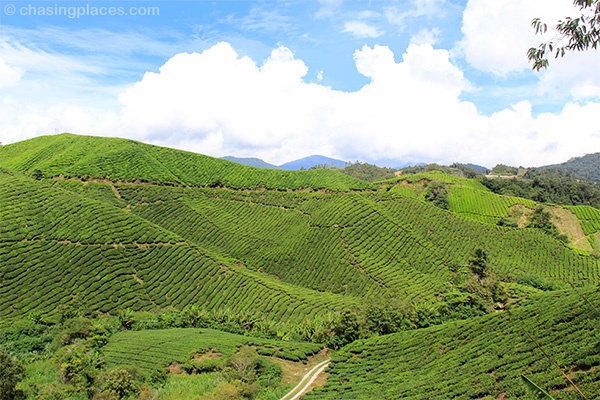
The answer lies in its spectacular evergreen hilly scenery. It is truly a feast for the eyes!
The Visitor Center is also equipped with a spacious café, a tourist shop, and an audio-visual room for those interested in the history of the company that established the plantation.
The Tea Center even offers free guided tea factory tours. Unfortunately, we didn’t make it on time for the tour, but the view of the tea plantation landscape was well worth the visit here.
The Boh Sungei Tea Plantation
I can’t believe that such a vast amount of land was dedicated to tea leaf planting. It was fascinating to learn about its long history, the passion people have for it, and the amount of work put into producing a plantation.
It’s safe to say that I didn’t really understand the hype around drinking tea. But after the visit to Boh Tea Plantation, I will never look at a cup of tea the same way again. I even enjoyed tasting a type of tea at the visitor’s café.
This is an example post, originally published as part of Blogging University. Enroll in one of our ten programs, and start your blog right.
You’re going to publish a post today. Don’t worry about how your blog looks. Don’t worry if you haven’t given it a name yet, or you’re feeling overwhelmed. Just click the “New Post” button, and tell us why you’re here.
Why do this?
Because it gives new readers context. What are you about? Why should they read your blog?
Because it will help you focus you own ideas about your blog and what you’d like to do with it.
The post can be short or long, a personal intro to your life or a bloggy mission statement, a manifesto for the future or a simple outline of your the types of things you hope to publish.
To help you get started, here are a few questions:
Why are you blogging publicly, rather than keeping a personal journal?
What topics do you think you’ll write about?
Who would you love to connect with via your blog?
If you blog successfully throughout the next year, what would you hope to have accomplished?
You’re not locked into any of this; one of the wonderful things about blogs is how they constantly evolve as we learn, grow, and interact with one another — but it’s good to know where and why you started, and articulating your goals may just give you a few other post ideas.
Can’t think how to get started? Just write the first thing that pops into your head. Anne Lamott, author of a book on writing we love, says that you need to give yourself permission to write a “crappy first draft”. Anne makes a great point — just start writing, and worry about editing it later.
When you’re ready to publish, give your post three to five tags that describe your blog’s focus — writing, photography, fiction, parenting, food, cars, movies, sports, whatever. These tags will help others who care about your topics find you in the Reader. Make sure one of the tags is “zerotohero,” so other new bloggers can find you, too.
 TRAVEL WITH SYALA